
ArkBridge AI Trading Review: Why Smart Investors Need More Than AI Tools Alone
A real-world review of ArkBridge’s AI trading tools, dedicated specialists, account upgrades, fees, withdrawals, education, and platform support


A real-world review of ArkBridge’s AI trading tools, dedicated specialists, account upgrades, fees, withdrawals, education, and platform support

In a market where every CFD broker promises the "best trading conditions," IUX attempts to stand out with a blend of a low barrier to entry, a broad offering, and aggressive flexibility. Operating as an ECN/CFD broker since 2016, it targets both beginner traders and investors who understand that the difference between a 1.0 and a 0.0 pip spread can matter far more than flashy advertising.

Thousands attended opening day as industry leaders, global brands, and financial innovators gathered in Limassol for networking, business meetings, and discussions on the future of financial services.

Limassol is set to welcome the global online trading industry this week as iFX EXPO International 2026 brings together more than 6,500 attendees and 200 exhibitors for one of the sector's largest international gatherings.

From the 16th to the 18th of June, iFX EXPO International is set to bring together some of the most influential voices in online trading, fintech, payments, liquidity, digital assets and financial services for an agenda built around the industry’s most important conversations.

Most forex brokerages already have the data to identify high-value traders, catch disengagement early, and allocate team resources more precisely. The problem is where that data lives.

Limassol, Cyprus – 4 June 2026 – iFX EXPO International has announced the launch of iFX Hack 2026, a 24 hour Trading & Fintech Hackathon powered by Amazon Web Services (AWS), bringing together developers, students, fintech professionals, entrepreneurs, traders, designers, and innovators to build solutions addressing real world challenges across trading, financial services, artificial intelligence, payments, and technology.

The upcoming event in Cyprus highlights the urgency for strategic partnerships in financial technology.

iFX EXPO International 2026 returns to Limassol, 16-18 June, and for the global brokerage industry, it remains the single most important event on the calendar.

Navigating Platform Verification, Asset Metrics, and How VirPoint AI Controls Volatility Under the Guidance of Senior Specialist Alexander Melnik.

Barcelona, Spain, May 2026. FinancialMarkets.media (FMM), a performance-focused digital media and financial marketing agency, announces that it has officially joined the Google Partners Program.

By 2026, stablecoins have stopped being just a traders' tool and have become a regular payment instrument. The total stablecoin market cap has crossed $320 billion, with USDT at roughly 58% and USDC near 24–25%. According to Artemis, on-chain stablecoin settlement volume in 2025 reached trillions of dollars — comparable to major card networks.

Have you ever read something and just felt it was written by someone who actually cared?
That feeling is hard to explain, but easy to recognize. It's the difference between words that inform and words that connect. And the good news? Getting your writing to that place isn't as far off as most people assume.

Barcelona, April 13, 2026. Propinder (www.propinder.com), a new prop trading comparison platform developed by FXStreet, is officially open to traders worldwide. The platform combines a short profiling survey with aggregated trader data to recommend prop firm challenges that match each trader's actual style, risk approach, and circumstances, rather than surfacing results based on who pays for placement.

Supply-side fears have spiked crude oil spot prices: short-term vs medium-term outlook.

Prop Trading Firm Pairs Industry Recognition With Measured Payout Metrics and System Disclosure

Global currency markets are undergoing a quiet but essential transformation, in which speed and precision, driven by algorithms, are becoming the determinants of success. This process moves the markets away from a state of constant reaction and into a purer, more ordered and more disciplined state of operation that operates in the background at all times, unencumbered by emotion or state.

The International Trading Institute (ITI) and Westcliff University have announced a new academic partnership to offer a Master’s in Trading degree taught by ITI and awarded by Westcliff University under its institutional accreditation, creating a structured, graduate-level pathway for aspiring and experienced trading professionals.

Sports betting has become an integral part of the entertainment and financial ecosystem in many European countries. However, the way betting activity is taxed varies significantly across jurisdictions.

Over the past decade, forex trading has undergone a significant transformation driven by automation and advances in technology. While early automated trading tools focused primarily on execution speed and signal generation, modern solutions are increasingly centered on monitoring, control, and transparency.

Log in to today's North American session Market wrap for January 16
Today marked another strange session with stock indexes fluctuating significantly before closing the week virtually unchanged.

Something quite unusual has been happening to me over the past few weeks: I am losing my words. I lose my words in the absurdity of the news flow. I simply don't know what to say or how to express myself while staying polite. And every week, since the year began, has kicked off with abnormal news.


EM currencies are generally ending the year on a strong footing – enjoying the benefits of lower core policy rates, a modestly weaker dollar and many offering high carry. There is a lot of focus on the renminbi at the moment and whether China's $1tr trade surplus will drive the renminbi much stronger. For today, the focus is on US jobs and eurozone PMIs

Wage growth is slowing quickly, at a time when the wider jobs market keeps cooling. The UK is becoming less of an outlier on inflation, and we expect a rate cut on Thursday and two further moves next year

The composite PMI dropped from 52.8 to 51.9 in December, with manufacturing output declining again. Overall, this reading still corresponds to decent GDP growth for the eurozone in the fourth quarter of 2025
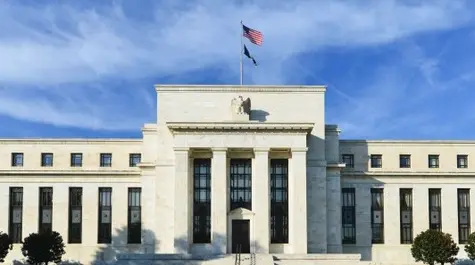
A 25bp cut is practically certain. It's 90% discounted. Not delivering is not really a viable option, given the way the Fed behaves. But, expect a hawkish cut, with a pause to be heavily intimated for the January meeting. It will be interesting to see next Fed liquidity management steps; likely they will need to buy more bills than the MBS roll-off requires
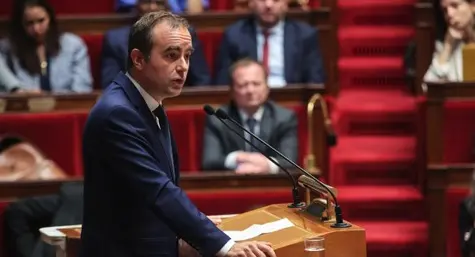
France passed its social security budget, but the state budget remains unresolved, and the deficit outlook is worsening

Oil prices traded to their lowest level since late October amid expectations of a surplus, while European gas prices appear to have found a floor for now

A surge in fresh vegetable prices helped propel China’s food inflation back to positive territory and headline CPI inflation to a 21-month high of 0.7% year on year in November

After this week's 'rate ripple', the focus today switches to North America. Here we have policy meetings for both the Fed and the Bank of Canada. The Fed is widely expected to deliver a hawkish cut, which leaves the risk on short-dated US rates and the dollar skewed to the upside. For the BoC, there could be some pushback against rate hikes priced for 2026

Italy’s industrial production data for October points to renewed weakness, tempering expectations of a stronger economic pickup in the final quarter of the year

Inflation in Hungary decreased in November, but this was mainly due to base effects and government measures. We might be starting on the downward part of the rollercoaster right now – but that means the ride may be set to shoot upwards next

As the online trading landscape continues to evolve, investors are seeking platforms that combine security, innovation, and global accessibility. VELADUR has emerged as a modern multi-asset broker and investment firm delivering speed, transparency, and precision to traders and investors worldwide.

Global supply chain problems and geopolitical concerns may have triggered debate among businesses about reshoring production closer to home, but the numbers tell us a different story. Reported euro area reshorings have steadily declined after being surpassed by offshorings in 2019, suggesting global supply chains remain deeply integrated

The UK Budget announcement (12.30 GMT) will see markets weigh both fiscal and inflationary implications. Sterling faces moderate downside risks in a non-inflationary, fiscally tight scenario, and severe risks if fiscal sustainability is called into doubt. Elsewhere, the dollar has more potential to depreciate despite yesterday’s correction

The UK government's budget announcement will need to show fiscal discipline to satisfy gilt investors, and while our baseline sees enough credibility to nudge the risk premium in gilt yields lower, we are well aware of significant upside risks too. Foreign gilt investors are relatively important and could even gain in importance in the future

Positive signals from both the US and Ukraine regarding a Russia-Ukraine peace deal continue to put pressure on energy markets. However, there’s little clarity on where Russia stands on the current plan

The November FX Report has been delayed but should be released soon. We expect an emphasis on the changing approach towards a tighter scrutiny on US partners’ FX practices, but we don’t think we’ll see any FX manipulator designation by Treasury. Thailand should, however, join the Monitoring List, and Switzerland will remain a focus point for markets

Combine rebounding investment with continued strength in private spending and you have a recipe for stronger economic growth. October's set of data suggests that GDP growth in the fourth quarter is likely to beat the 3.7% year-on-year rate posted in the third. At the same time, inflation is declining, which paves the way for another rate cut in December

Intuitively, a deal with Russia would help euro rates higher, but falling gas futures are already pushing down the curve through lower inflation expectations. Tensions with Russia are likely to stay, which means risk sentiment should remain fragile

Same old story: Germany’s longest stagnation has now been confirmed. The economy will remain stuck until fiscal stimulus begins to take effecta

Oil prices rose yesterday, in step with a global equity rally. However, peace talks remain a crucial area of uncertainty for the market

A December Fed cut is back as a baseline scenario for markets, but the dollar has remained relatively strong. Our short-term valuation metrics point to significant risks of a USD correction, unless data prompts a hawkish repricing. Geopolitics will remain in focus, both for European FX (Ukraine peace talks) and the yen (Japan-China tensions over Taiwan)

The federal government has unveiled a new agreement to finalise the 2026 budget and outline the main direction for economic policy in the coming years. While these steps will help reduce the public deficit, further action will be necessary to stabilise the debt ratio

Buoyant economic growth and signs of recovering investment are paired with slowing wage dynamics, easing upside risks to the current disinflation trend. With CPI inflation approaching the National Bank of Poland's target, the central bank may continue with policy easing. We expect another 25bp rate cut in December


With dropping expectations and an only somewhat improving current assessment, the November Ifo index suggests that the German economy remains deeply stuck in stagnation at year-end

The week draws to a close on a positive note after a significant selloff in risk assets as US rate cut bets continued to decline from the Federal Reserve's December meeting.

This week, we should see more economic data from the region after a rather quiet last week.

We've been here before, but prospects of a peace deal in Ukraine are starting to show in FX. CEE FX is holding last week's gains, and EUR/CHF is now also edging back above 0.93. Lower energy prices should be supportive for the euro. Further progress on peace discussions and potentially a softer Fed Beige Book on Wednesday could see EUR/USD hold 1.1500

Oil prices are under renewed pressure amid ongoing peace talks to end the war in Ukraine

Japan's stimulus package targets inflation stabilisation, strengthening defence and diplomacy, and sustainable growth. It should spur short-term growth and reduce inflation, but may put pressure on JGBs. The BoJ's policy normalisation will likely continue, though it faces challenges and may proceed at a slower pace

The composite PMI remained broadly unchanged in November (52.4 compared to 52.5 in October), which is well above the neutral level of 50. This suggests that growth in the short run remains decent despite significant global headwinds

French business confidence and PMI indicators edged higher in November, driven by renewed optimism in the service sector. This rebound could support growth in the coming months, despite more mixed signals from industry

It could have been a lot worse for EUR/USD this week. A set of FOMC minutes that poured cold water on a December rate cut and a strong headline rise in the US jobs report could have seen 1.1500 taken out again. But instead, investors seemed to have just delayed rather than abandoned pricing for Fed easing. And Europe may still being showing some signs of life

Euro rates are more focused on the improving macro story than on AI-driven equity jitters. This also means that Bunds may not prove an effective hedge against an equity sell-off

The Bank of Korea is expected to hold the rates steady. Meanwhile, data highlights include Chinese industrial profits, Tokyo inflation, Korean and Taiwanese industrial production and Indian GDP

Japanese data shows inflationary pressures are firm and that exports remain resilient despite tariffs. An upbeat flash purchasing manager’s index suggests the economy is on the recovery path. While these outcomes favour a Bank of Japan rate hike in December, government pressure to keep policy loose might delay a move until next year

US jobs growth was stronger than expected in September, but unemployment also rose amid workers returning to the labour market and seeking jobs. Given the Fed's recent hawkish shift and the lack of official data scheduled before the 10 December FOMC meeting, it is understandable that the market thinks the next move won't come until early 2026

As negotiations to reach a final Omnibus I proposal have started, we analyse the impact each proposal would have on European banks. Despite the variations, all three proposals suggest a single path towards major scope reductions. This would be a positive for banks no longer required to report on ESG but complicate disclosures for those still in scope

Bank Indonesia held its policy rate at 4.75% amid inflation pressures and rupiah weakness, but we expect a cut in December to support growth. Risks remain skewed toward delays if currency pressures persist or the Fed postpones easinga

UK inflation has peaked, but the latest data is a tad hawkish for the Bank of England. Food inflation was strong, which is red meat for the hawks. Services inflation rose, once volatile items are stripped out. However, we still expect the Bank to cut rates in December

Global markets are trading in a slightly nervous fashion as they brace themselves for a potential correction in US tech stocks. So far, the correction has been modest compared to the 25% fall in bitcoin, but events over the next 24 hours will have a say in whether moves extend. We'll have FOMC minutes, Nvidia earnings and the September jobs reporta

Oil prices moved higher yesterday amid lingering supply risks, and a stronger diesel market lent additional support

Equities jitters have helped to steepen curves, though all within prior ranges and a 10y UST yield above 4%. As 10y Bunds richen versus swaps, the swap rate remains near the upper end of its range while the back end is sensitive to Dutch pension fund news. Meanwhile, latest TIC data show decent buying of US assets, including foreign demand for Treasuries

Tepid pricing in the industry and weakening price dynamics in agriculture are a downward risk for consumer prices. If consumer spending remains steady, inflation is likely to hover around the target over the upcoming year. A combination of factors might result in a low-inflation environment

Gilt yields jumped after reports the UK government was scrapping plans to raise income tax, casting fresh doubt over how a £30bn gap will be plugged. We expect about half to come from upfront tax hikes, so yields may not climb much further. If we’re wrong, blame the politic

The souring in risk sentiment before tomorrow’s Nvidia earnings is hitting high-beta currencies and offering some support to the dollar ahead of Thursday’s September jobs reports. The yen is being held back by escalating tensions between China and Japan, as well as soft data and speculative flows testing the intervention threshold

Wage growth was slightly higher than expected in September. This growth in purchasing power could overcome the Hungarian economy’s Achilles heel: a lack of confidence. In the coming months, inflation will fall and wages will grow strongly
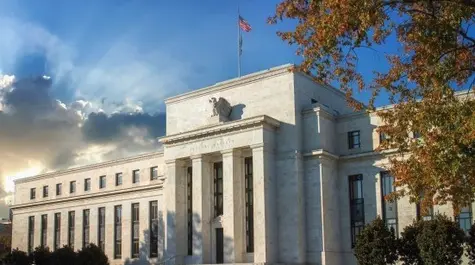
We're not overly concerned about tightness in US repo of late. It does show that the liquidity environment is uneven. It appears that eligible standing repo participants don't need it, as there are minimal asks for it. Frustrating for the Fed, as it sees the effective funds rate creeping higher. T-bill buying from 1 December is far from perfect. But it will do

At a calm press briefing, the National Bank of Romania unveiled its November Inflation Report, announcing upward revisions to its inflation trajectory. The overall message conveyed stability, indicating that the Bank remains on a steady course despite the higher projections

October inflation was confirmed at 2.8%YoY while core inflation likely moderated to 2.9%YoY from 3.2%YoY in September, driven by softer services prices as businesses face demand constraints. Disinflation is now reaching the services sector, which is a positive sign for monetary policy and gives room for more rate cuts in the coming quarters

Next week, we’ll be watching for September’s delayed US jobs report and the release of October's more hawkish Fed minutes, which could dampen hopes for a December rate cut. We also expect the National Bank of Hungary to hold rates while signalling they’ll remain high for some time, with the release of Czech PPI data also due

Romania’s economy delivered a mild upside surprise in the third quarter. The flash estimate points to 1.6% annual growth, above our expectations, although it still contracted by 0.2% versus the previous quarter. Taken together, after nine months of 2025, the economy is 0.8% above the same period of 2024
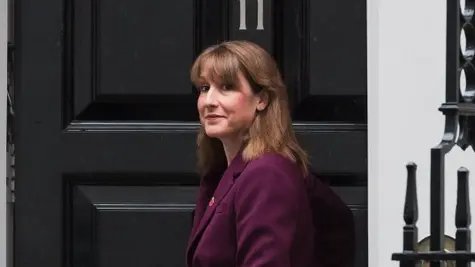
The drop in USD this week seems to be linked to expectations that US data will come in soft. But hearing Fed speakers, the move seems a bit premature, even if it looks like we could get September payrolls data soon. In the UK, the government is scrapping its income tax hike plans. GBP downside risks have suddenly increased

Euro rates are near the top of their ranges again. We don't expect the front-end to remain a driver, with now only a 30% chance of an ECB cut priced down the road despite remaining risks around the outlook. Dutch pension reforms appear to help push the 10s30s steeper as dynamics detach from the US curve
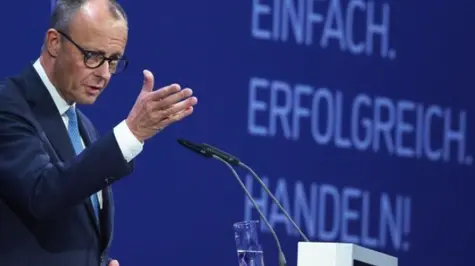
Earlier this summer, German Chancellor Friedrich Merz promised a 'Fall of reforms'. This week, the government moved to accelerate decision-making, unveiling a fresh set of policy announcements within just the past 24 hours

Bank Indonesia and the People’s Bank of China are both expected to maintain current interest rate levels. Key releases include Japan's GDP, trade figures, and inflation, Taiwan's export orders and Singapore's GDP

China's key activity indicators continued to slow across the board in October as policymakers appear to be delaying further policy support. This year's growth target is likely to require minimal additional support to be reached, but supportive policies will be necessary to achieve long-term goals

Oil prices managed to edge higher yesterday, despite several bearish data releasesa

This more than compensates for August’s fall, confirming that summer data has to be interpreted with a pinch of salt. Italy's industrial stagnation is not over yet, but the picture might improve marginally over the fourth quarter

Romanian Inflation eased marginally in October to 9.8% versus September’s 9.9%. Declines in some food prices provided relief, but services inflation remains tricky. Wage growth slowed to just 4.1% in September, acting as a clear drag on demand. We maintain our year-end inflation forecasts at 9.6% for 2025 and 4.5% for 2026

EUR/USD has held onto its gains this week – though that largely looks a function of the slightly softer dollar. Yesterday's release of the German ZEW expectations index for November was not particularly encouraging. However, the aggregate ZEW figure for the eurozone as a whole ticked up, questioning whether Germany is increasingly becoming an outlier.

The carry trade suffered a stress test yesterday, when one popular target currency, the Hungarian forint, had to cope with prospects of wider budget deficits. After selling off 0.7%, the forint is already coming back bid. With volatility expected to stay low, it's hard to see any major unwinds of carry strategies in the near term

We think markets are right to price in more Bank of England easing, but the upcoming budget on 26 November can still bring both bullish and bearish surprises. Meanwhile, concerns around the US job market are offsetting the positive impact of a likely government reopening on risk sentiment

The oil market rallied yesterday, boosted by the strength of the refined products market

South Korea’s jobless rate rose in October, but it remains below 3%. The Bank of Korea is expected to keep policy unchanged in November amid concerns about property risk and volatile foreign exchange markets

Inflation in Hungary showed signs of stagnation in October, yet this is still not a success story. With price pressures still above the central bank’s target, it is highly unlikely that we will see any interest rate cuts until autumn next year

Real retail sales growth came in weaker than expected, implying stagnation since April. This warrants some caution regarding the consumption outlook. Still, households have relatively strong resources which could support robust spending as the year approaches an end

Third-quarter GDP growth disappointed at 4.0% YoY, dragged down by weak investment and softer government spending, while exports provided temporary support. We downgrade our 2025 growth forecast to 4.7% (from 5.2%) as sentiment weakens and tariff headwinds loom, reinforcing our call for a 25bp central bank rate cut in December

It has been a mixed week for the dollar, where early-week strength finally eased a little yesterday on indications of softer US jobs data. Yet with the US government shutdown ongoing, we are still in the dark about the true labour market picture. Expect more $ consolidation and focus on regional stories such as soft China trade data and the Canada jobs release

Today's data is more evidence of the small rebound of the German economy after the summer. However, the September increase in exports is too weak to dispel concerns about persistent structural weakness

In the Eurozone, ECB’s Schnabel sees money market rates rising as system reserves decline, with banks then turning to the ECB for liquidity. It is part of the plan and could happen in mid-2026, but is more likely to happen later. Meanwhile, US Treasuries are being buffeted by contrasting impulses. It's been quite a week, but we broadly end where we started

China's deflation is expected to continue, while the government releases data on retail sales, fixed asset investment, and industrial production. South Korea will release the unemployment rate

Oil prices settled lower yesterday with a large increase in US crude oil inventories, while surplus expectations for the global oil market will also be providing some headwinds

Despite good ADP and ISM services data, the USD has corrected lower. With equities re-stabilising, the risks remain of further USD pullbacks after a rally that has exceeded what rate differentials can justify. Today, we see the BoE on hold despite mounting speculation of a pre-Budget cut. Norges Bank is likely to hold too, with low risks of guidance tweaks

Fed Chair Powell's reticence to cut in December remains a driver of sentiment. Nevertheless, Treasuries are interpreting the various crosswinds as supportive of a rise in yields. We don't think the Bank of England will cut, but markets are not fully convinced. Gilt yields have little room to move lower as the Budget risk premium has already fallen

It's the expected rebound in industrial production in September. However, it's a rebound which is too weak to mark any turnaround. Instead, even with some cyclical rebound in the making, structural weaknesses will put a lid on German industrial production for a while

As expected, NBP policymakers delivered their fourth consecutive 25bp rate cut in November, extending the scale of monetary easing this year to 150bp. Rate-setters reacted to lower current inflation, but may pause before a final adjustment to monetary policy. We see two more cuts in the first half of next year, with the target rate at 3.5-4% in 2026