It's still uncertain whether German businesses are eagerly seeking a dose of optimism or if a fundamental shift is currently taking place. In any case, German business sentiment continues to improve. Germany’s most prominent leading indicator, the Ifo index, increased for the sixth consecutive month, coming in at 88.4 in June, from 87.5 in May. This is now the highest level since last summer.
Although the current assessment component stayed nearly unchanged at a weak level, expectations rose again to 90.7 from 89.0 in May, reaching their highest point in more than two years.
Riding the wave of optimism
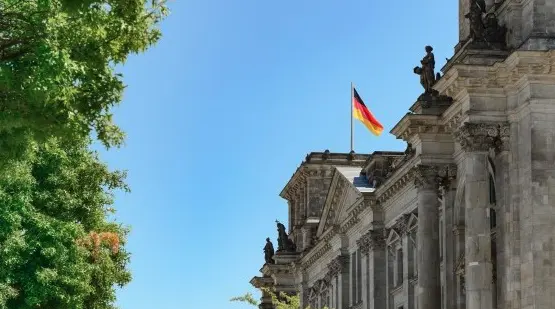
A wave of optimism seems to have hit the German economy, but it remains unclear whether it is really based on stronger fundamentals or just wishful thinking. After the back-and-forth on US tariffs, German businesses seem to be focusing on the bright side of what could happen under the new German government, rather than fearing the downsides from ongoing uncertainty and trade tensions. And at least the optics of the new German government are good.
German businesses had grown disillusioned with the last government’s ongoing internal controversies. Now, the sheer fact that the new government has avoided big blunders like open controversies or erratic policy announcements has boosted its popularity. Let’s not forget that so far, there haven’t been any additional economic policy measures on top of the coalition agreement. Everything presented in recent weeks – emergency support measures for the economy or today’s spending plans in the 2025 and 2026 budget – has always been part of the coalition agreement and is nothing new.
Nevertheless, these days, just delivering on announced policy measures is a welcome change and brings back confidence in a highly insecure econo
List of downside risks has become longer recently
As much as we yearn for some optimism, the reality is that, at least in the near term, the list of downside risks for the German economy has grown rather than shrunk. Consider the impending US tariffs and the imminent end of the 90-day pause. Or the stronger euro, which acts like an additional tariff for German exports. Or higher oil prices, which will exert pressure on Germany’s energy-intensive industry. Or the elevated geopolitical tensions.
The German economy simply remains in the middle of two seismic activities: a new government, which seems to lack strong ambition for structural reforms but will have access to unprecedented fiscal space for infrastructure and defence investments, and fundamental shifts in trade and geopolitics, including US tariffs.
The future is now. Really?
We have always argued that the longer-term outlook for the German economy looks brighter than the short-term outlook. The substantial fiscal stimulus over the next few years, in infrastructure and defence, will lead to an – at least cyclical – rebound of the German economy. It looks as though today’s Ifo index takes a significant downpayment of what is still to come. Or in other words, at least for German businesses, the future is already now. We wished it were true.