The July inflation overshoot largely stems from a sharp spike in energy prices after the government ended electricity price caps on 1 July. Electricity tariffs soared by almost 62% in July versus June – roughly double our assumption of a 30% increase – while natural gas prices also rose more than anticipated, albeit to a much lesser extent, by 3.3%.
Higher inflation trajectory – peak near 10% and year-end around 9%
This energy-driven shock has shifted the entire inflation trajectory upward. We now anticipate inflation to continue rising in the coming months, peaking around September or October just below 10% (compared to our previous peak forecast of 8.2%). A temporary double-digit inflation reading is now a possibility. Accordingly, our year-end 2025 forecast has been raised to 9.3%, factoring in both July’s spike and upcoming price pressures from fiscal measures such as VAT and excise hikes starting in August. In short, the inflation outlook for the next year has been significantly revised due to this one-off energy adjustment.
Disinflation in 2026: base effects play a key role
Despite the near-term spike, the medium-term disinflationary outlook remains intact. Starting around mid-2026, strong base effects will kick in and should pull inflation markedly lower. We project inflation falling to 4.3% by end-2026 and below the National Bank of Romania's upper target band of 3.5% in early 2027. However, the pace of disinflation will depend on broader factors such as economic growth, wage dynamics, and inflation expectations, which the NBR will continue to monitor. Our baseline scenario assumes inflation will normalise to low single digits in the latter half of 2026.
Policy implications
Despite the inflation surprise, we do not expect the NBR to raise interest rates. With economic growth stagnating and inflation projected to ease next year, a rate hike is seen as unnecessary. We maintain our view that the NBR will keep the key rate at 6.50% until the second quarter of 2026, after which a gradual easing cycle may begin. By the end of 2026, we expect the policy rate to be around 5.5%.
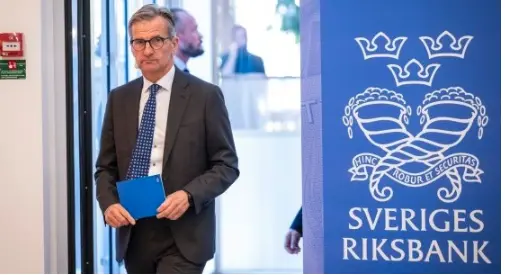
During the presentation of the August Inflation Report, Governor Mugur Isărescu emphasised that, barring major shocks, market rates could improve slightly in the near term. He expressed hope that no rate hikes will be needed and reiterated that currency depreciation is not a viable solution to Romania’s competitiveness challenges.
NBR August Inflation Report – revised projections already outdated
The NBR’s updated projections, released today, already reflect a significant upward revision to short-term inflation due to the end of electricity price caps and the August tax hikes. The central bank now expects headline CPI to peak at 9.2% in September and end 2025 at 8.8%. Core inflation is projected to reach 7.1% in September before easing to 2.7% by December 2026.
However, these projections do not yet account for the July inflation surprise. Adjusting for the new data would likely add 0.4–0.5 percentage points to the inflation outlook over the next year.
Governor Isărescu maintained a balanced stance, noting that while the key rate should not be lowered, it is equally important not to raise it. He reiterated that exchange rate depreciation is not a suitable adjustment tool, as it would exacerbate inflationary pressures. The NBR expects inflation to return to target by the third quarter of 2026, driven by base effects and subdued domestic demand amid fiscal consolidation.
Key risks: fiscal policy and FX in focus
Looking ahead, we believe that fiscal policy and exchange rate developments are the main risk factors for the inflation and policy outlook. On the fiscal side, the government’s consolidation package will add to inflation in the coming months, but its overall impact has been largely anticipated by now. A lapse in fiscal discipline could fuel demand and price pressures, potentially forcing the NBR to adopt a more aggressive stance.
Exchange rate stability is another crucial assumption: so far, the leu has been stable around 5.07 per euro, helping contain imported inflation. Any relevant depreciation of the leu would pose an upside risk to the inflation path, potentially prompting the central bank to react (likely through market interventions and/or liquidity tightening rather than rate hikes). For now, currency stability remains the NBR’s preferred course, and recent comments confirm the nominal exchange rate will likely be protected as an inflation anchor
Romania’s July inflation shock has significantly altered the near-term outlook. We now expect inflation to approach double digits this autumn and end the year at 9.3%. However, strong base effects should drive sharp disinflation in the second half of 2026. The NBR is expected to maintain its current policy rate of 6.50% through this inflation spike, relying on patience and fine-tuning. Assuming no major fiscal or currency disruptions, inflation should realign with the target by 3Q 2026 (according to the NBR) or 1Q 2027 (in our view), allowing for a cautious start to policy easing from mid-2026.